From Kodagu to Coastal Karnataka: Designing Homes That Adapt to Local Climates
BILARA GROUP · 07 AUGUST 2025 · 4 MIN READ
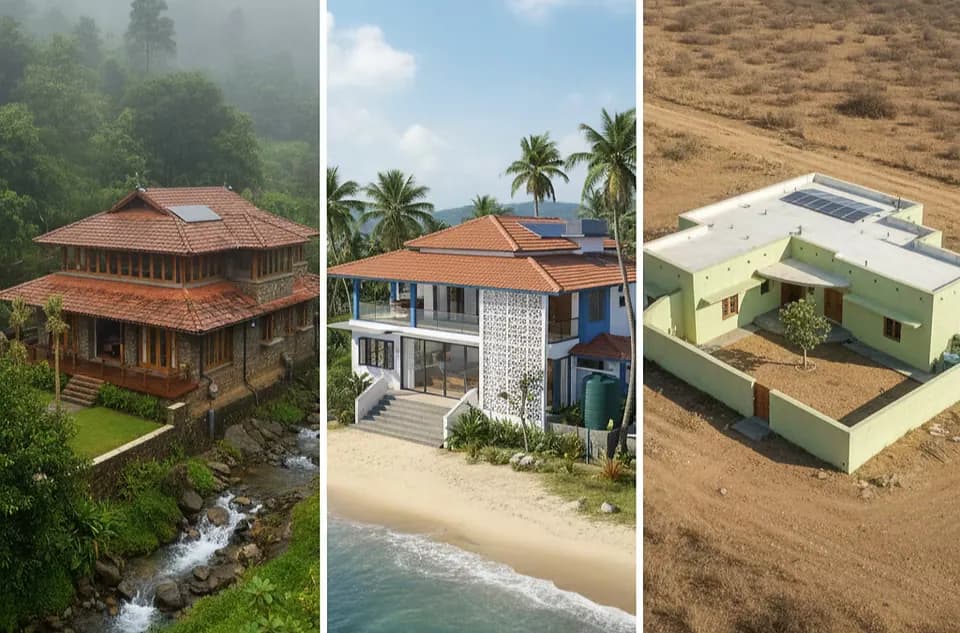
Karnataka is a state of extraordinary diversity not only in culture and landscape but also in climate. From the mist-covered hills of Kodagu and Chikmagalur to the hot and dry interiors of Hubballi, Ballari, and Raichur, and the humid coastal regions of Mangaluru, Udupi, and Karwar, every location presents different challenges for homeowners.
This raises an important question:
Can the same house design work across every part of Karnataka?
Not always.
A home designed for heavy rainfall and high humidity may need very different features from a home built in a hot and dry climate. Rainfall, temperature, sunlight, humidity, wind, terrain, and site conditions can all influence how comfortable and durable a home will be.
This is where climate-responsive home design in Karnataka becomes important.
A well-designed home should do more than look beautiful. It should respond to its surroundings, improve indoor comfort, manage heat and moisture, and remain suitable for the local environment.
In this article, we explore how homes across Karnataka can be designed to suit their regional climates by combining traditional architectural wisdom with modern construction practices.
What Is Climate-Responsive Home Design?
Climate-responsive home design means planning a house based on the environmental conditions of its location.
A climate-responsive design considers:
-
Sunlight and heat
-
Rainfall
-
Humidity
-
Wind direction
-
Temperature
-
Site orientation
-
Terrain
-
Local materials
The goal is simple: design a home that works with its environment rather than against it.
For homeowners, this can lead to better natural ventilation, improved comfort, reduced moisture problems, and potentially lower dependence on mechanical cooling.
Designing Homes for Different Climates in Karnataka
Building for the Western Ghats: Kodagu, Chikmagalur and Hassan
The Western Ghats region is known for lush landscapes, heavy rainfall, high moisture, and relatively cool temperatures.
For homeowners here, a common concern is:
How can a home handle heavy rainfall and moisture?
Traditional architecture offers useful answers.
Homes in regions such as Kodagu have traditionally used sloped Mangalore-tiled roofs to allow rainwater to drain quickly. Deep verandas, raised plinths, and thick stone or laterite walls also helped protect homes from moisture while improving comfort.
Modern homes in high-rainfall regions can consider:
-
Sloped roofs for effective drainage
-
Wide roof overhangs
-
Proper site drainage
-
Moisture-resistant materials
-
Raised plinth levels where appropriate
-
Covered verandas
-
Effective waterproofing
-
Ventilated roof spaces
Large windows can help connect the home with the surrounding landscape. However, suitable shading, overhangs, or louvers can help protect openings from excessive rain and sunlight.
The goal is to balance natural light, ventilation, scenic views, and weather protection.
Designing for Coastal Karnataka: Mangaluru, Udupi and Karwar
Coastal Karnataka experiences high humidity, heavy monsoon rainfall, warm temperatures, and, in some locations, salt-laden air.
So, what should homeowners consider when designing a home in Mangaluru or Udupi?
Ventilation and material durability become important.
Traditional Mangalorean homes often used laterite stone, terracotta roof tiles, shaded verandas, and large openings features that responded well to the local climate.
A house design for coastal Karnataka can consider:
-
Cross-ventilation
-
Shaded windows and openings
-
Wide roof overhangs
-
Proper rainwater drainage
-
Moisture-resistant finishes
-
Durable materials
-
Ventilated roof spaces
-
Covered outdoor areas
Features such as terracotta screens or jaalis can also help manage sunlight and airflow while adding a regional architectural character.
With significant seasonal rainfall, rainwater harvesting can also be considered as part of the home's overall water management plan.
Designing for Hot and Dry Regions: Hubballi, Ballari and Raichur
Central and northern Karnataka experience hotter and drier conditions, intense sunlight, and limited rainfall in many areas.
The main challenge is often:
How can you design a house that remains comfortable during hot weather?
Traditional building approaches provide several useful principles.
Thicker walls, shaded courtyards, controlled openings, and appropriate building materials can help reduce direct heat gain.
Homes in hot and dry regions may benefit from:
-
Proper building orientation
-
Shaded outdoor areas
-
Courtyard layouts
-
External shading
-
Suitable wall materials
-
Reduced direct solar exposure
-
Landscaping and trees for shade
-
Light or heat-reflective exterior finishes
Courtyards can introduce natural light and ventilation while providing a protected outdoor space.
Water conservation and efficient resource planning should also be considered when designing homes in drier parts of Karnataka.
Home Design Challenges in Bengaluru and Mysuru
Bengaluru and Mysuru generally have more moderate climates, but urban construction creates a different set of challenges.
Homeowners often have to deal with:
-
Smaller plots
-
Limited open space
-
Closely built neighbouring properties
-
Reduced airflow
-
Increasing urban heat
-
The need for multifunctional spaces
How can you create a comfortable home when space is limited?
Thoughtful planning becomes essential.
Urban homes can benefit from:
-
Proper building orientation
-
Natural ventilation
-
Daylight optimisation
-
Efficient floor plans
-
Window and terrace shading
-
Smart storage
-
Compact layouts
-
Green spaces where practical
Rooftop gardens, balconies, and landscaped spaces may also help improve the relationship between the home and its surroundings.
The focus should be on creating homes that are space-efficient, comfortable, and suited to the urban environment.
Can Traditional Architecture and Modern Technology Work Together?
Yes. In fact, some of the most effective climate-responsive homes combine both.
Traditional architecture across Karnataka developed in response to local weather, materials, and lifestyles. Features such as sloping roofs, courtyards, verandas, shaded openings, stone walls, and terracotta tiles were not only aesthetic choices, they also served practical purposes.
Modern homes do not need to copy traditional architecture exactly. Instead, these principles can be adapted to contemporary lifestyles.
A modern climate-responsive home can combine:
-
Traditional shading strategies
-
Modern insulation
-
Energy-efficient windows
-
Improved waterproofing
-
Rainwater harvesting
-
Solar energy systems
-
Durable materials
-
Smart home technology
The goal is to create a home that is comfortable, efficient, durable, and connected to its environment.
Common Questions About Climate-Responsive Home DesignShould my house design change based on my location in Karnataka?
Yes. Local conditions such as rainfall, temperature, humidity, sunlight, wind, terrain, and site orientation can influence important design decisions.
What type of home design is suitable for heavy rainfall?
Homes in high-rainfall areas may benefit from sloped roofs, effective drainage, wide overhangs, waterproofing, moisture-resistant materials, and carefully planned openings.
How can I improve ventilation in a humid climate?
Cross-ventilation, well-positioned windows, shaded openings, and suitable roof ventilation can help improve airflow. The final approach should always consider the specific site.
How can a home stay cooler in a hot and dry climate?
Building orientation, external shading, suitable materials, controlled solar exposure, courtyards, landscaping**, and ventilation strategies can all contribute to improved comfort.**
The Best Home Design Adapts to Its Surroundings
From the rain-soaked hills of Kodagu and Chikmagalur to the humid coastline of Mangaluru and Udupi, the hot interiors of Hubballi, Ballari, and Raichur, and the growing urban environments of Bengaluru and Mysuru, Karnataka experiences a wide range of climatic conditions.
That is why there is no single formula for designing the perfect home.
A successful climate-responsive home design in Karnataka begins with understanding the land, local weather, orientation, terrain, and the needs of the people who will live there.
The best homes do not ignore their surroundings.
They adapt to them.
By combining regional architectural knowledge with modern engineering and construction practices, homeowners can create spaces that are more comfortable, durable, efficient, and suited to where they are built.
Planning to Build a Home in Karnataka?
At Bilara Group, every home begins with an understanding of the site, climate, and lifestyle of the people who will live there.
Whether you are planning a home in Kodagu, Chikmagalur, Mangaluru, Udupi, Bengaluru, Mysuru, Hubballi, or another part of Karnataka, the right design should respond to both your location and your requirements.
Contact Us** to Plan Your Dream Home**
<footer class="PhCafd B6ltWa"Continue reading